Understanding Form DPT-3 Under the Companies Act, 2013
Compliance has become one of the most important responsibilities for companies operating in India. Among the various annual ROC compliances, Form DPT-3 plays a significant role in reporting outstanding money received by companies. Even companies that have not accepted public deposits may still be required to file DPT-3 if they have certain outstanding financial transactions.
Many businesses mistakenly assume that DPT-3 applies only to companies accepting deposits from the public. However, the scope of this form is much wider and includes several categories of exempted deposits and loans. Proper understanding of the applicability of DPT-3 is therefore essential for every company to avoid non-compliance and penalties.
What is Form DPT-3?
Form DPT-3 is a return filed with the Ministry of Corporate Affairs (MCA) under the provisions of the Companies Act, 2013 and the Companies (Acceptance of Deposits) Rules, 2014. The form is used by companies to furnish details regarding deposits, loans, and other outstanding receipts of money.
The objective of this filing is to ensure transparency in financial transactions and to help regulatory authorities monitor the nature of funds received by companies. Through DPT-3, companies disclose whether the money received qualifies as deposits or falls under exempted categories.
Applicability of DPT-3
DPT-3 filing is applicable to most companies, including Private Limited Companies, Public Limited Companies, One Person Companies (OPCs), and Section 8 Companies. Even if a company has not accepted deposits from the public, it may still be required to file the form if it has outstanding loans or receipts that are considered exempted deposits under the law.
Many companies receive financial assistance from directors, shareholders, group companies, or customers in the normal course of business. Such transactions may still need to be disclosed through DPT-3 filing depending on their nature and outstanding status as on 31st March of the financial year.
Common Transactions Covered Under DPT-3
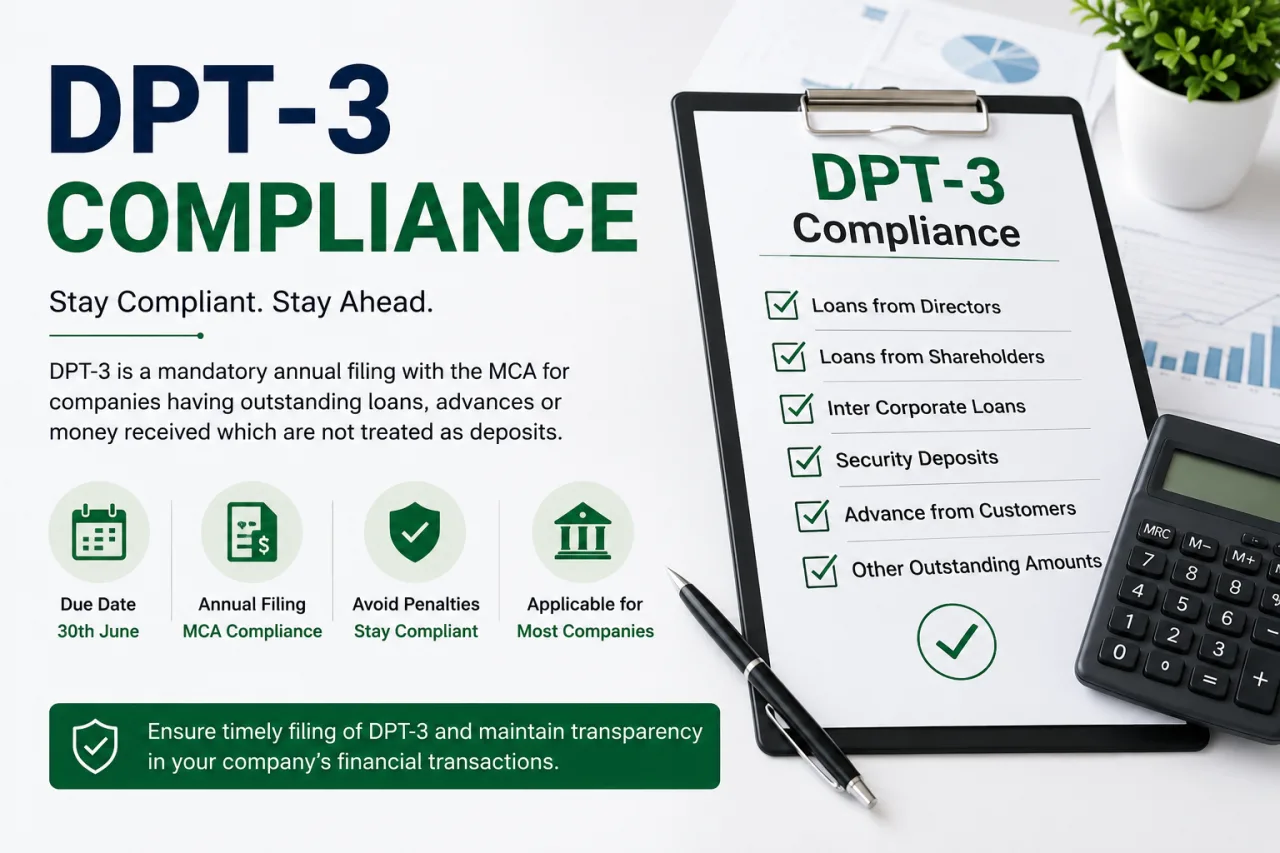
Several financial transactions may come within the reporting requirements of DPT-3. These commonly include unsecured loans from directors, loans from shareholders, inter-corporate borrowings, customer advances, security deposits, and commercial borrowings.
In many cases, businesses also need to examine long outstanding balances, advances received for services, and certain operational receipts to determine whether reporting is required. Proper classification of these transactions is extremely important because incorrect reporting may result in compliance complications or notices from the Registrar of Companies (ROC).
Companies Exempted from Filing
Certain classes of companies are exempted from the requirement of filing Form DPT-3. These generally include Government Companies, Banking Companies, Non-Banking Financial Companies (NBFCs) registered with the Reserve Bank of India, and Housing Finance Companies.
Although exemptions exist for specific categories, companies should always verify their applicability carefully before assuming exemption from filing obligations.
DPT-3 Due Date
Form DPT-3 is generally required to be filed annually on or before 30th June for the outstanding amounts as on 31st March of the relevant financial year. Since the filing involves collection and verification of financial information, companies are advised to begin preparations well in advance.
Delays in filing may result in additional fees and unnecessary compliance risks. Timely compliance also helps maintain proper corporate governance standards and regulatory credibility.
Documents Required for Filing
To complete DPT-3 filing accurately, companies usually require audited financial statements, details of outstanding loans, auditor’s certificate, board resolutions where applicable, and Digital Signature Certificates (DSC) of the authorized signatories.
Supporting documents relating to exempted deposits and loan confirmations should also be maintained properly. Proper documentation plays an important role in avoiding future disputes or compliance scrutiny.
Penalty for Non-Compliance
Failure to file Form DPT-3 within the prescribed due date may attract additional filing fees and penalties under the Companies Act, 2013. Non-compliance may also lead to notices from the ROC and can create difficulties during statutory audits, due diligence exercises, funding activities, or regulatory inspections.
Repeated or intentional non-compliance may adversely affect the compliance status and reputation of the company as well as its officers.
Important Compliance Tips
Companies should carefully review all outstanding balances before filing DPT-3 and ensure that the transactions are correctly classified under the Companies (Acceptance of Deposits) Rules, 2014. Director loans should be properly supported with declarations wherever required under the law.
It is also important to reconcile the figures reported in DPT-3 with audited financial statements and books of accounts. Early preparation and professional review can significantly reduce the chances of errors or rejection during filing.
Why Professional Assistance Matters
DPT-3 filing is not merely a formality but a technical compliance requirement involving legal interpretation and financial verification. Many companies face confusion regarding whether certain receipts qualify as deposits or exempted deposits.
Professional assistance helps businesses identify reportable transactions, prepare supporting documentation, ensure proper classification, and complete the filing process smoothly within the prescribed timelines. Expert guidance also minimizes the risk of penalties and future compliance complications.
Conclusion
Form DPT-3 is an important annual compliance requirement that companies should not overlook. Even businesses that have never accepted public deposits may still be required to file the form due to outstanding loans or exempted financial transactions.
Proper understanding of applicability, timely filing, and accurate disclosure are essential to maintain compliance under the Companies Act, 2013. Companies should ensure that all financial transactions are properly reviewed and reported to avoid penalties and maintain strong regulatory standing.