
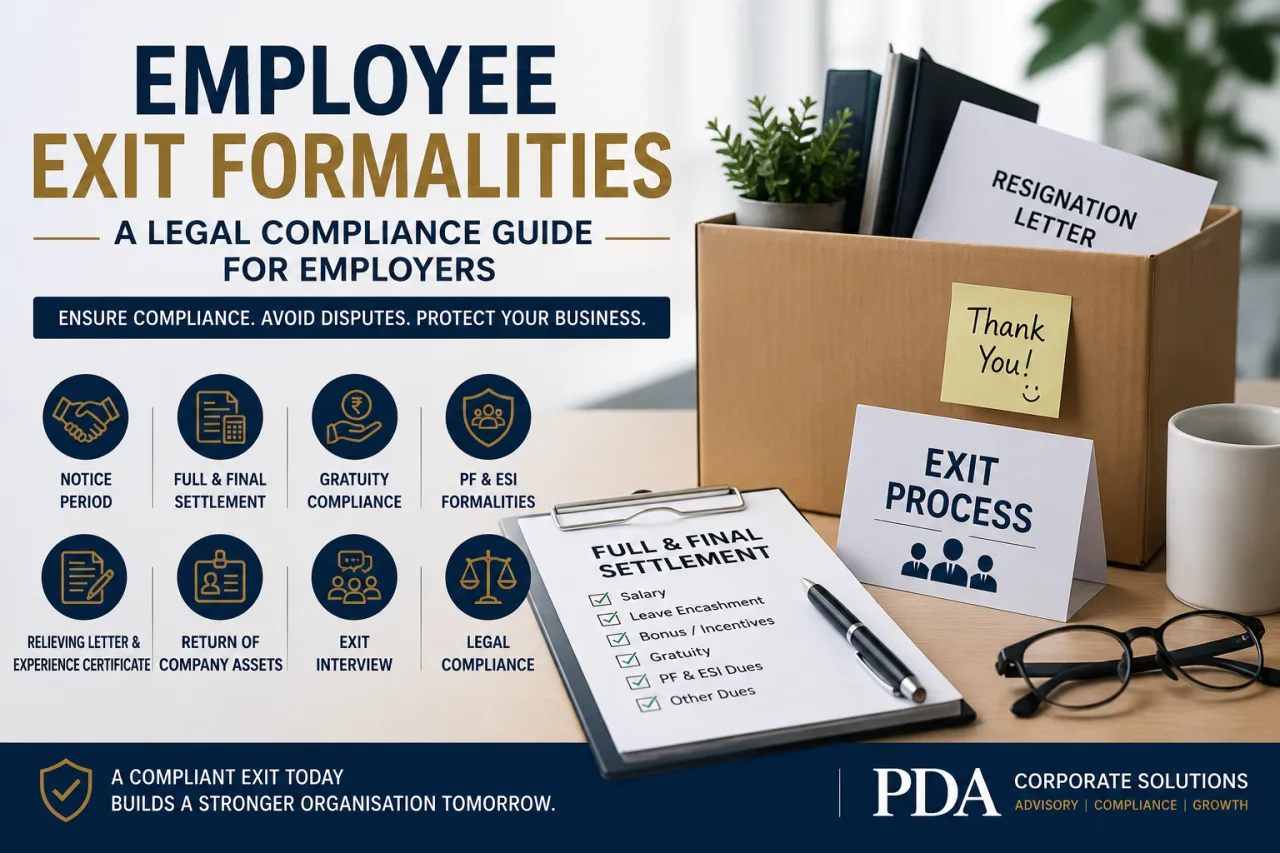
Employee Exit Formalities: A Legal Compliance Guide for Employers
Introduction
Employee exits are a natural part of every business. Whether an employee resigns voluntarily, retires, completes a fixed-term contract, or is terminated for valid reasons, employers must ensure that the separation process is handled professionally and in compliance with applicable labour laws.
Many organizations focus extensively on recruitment and onboarding but overlook the importance of a structured exit process. Failure to comply with legal requirements during employee separation can lead to disputes, labour complaints, reputational damage, and financial liabilities.
A well-managed exit process protects both the employer and employee while ensuring smooth business continuity.
Why Employee Exit Compliance Matters
The departure of an employee involves more than simply accepting a resignation or issuing a termination letter. Employers have several legal and administrative obligations that must be completed before closing the employment relationship.
Proper exit formalities help organizations:
-
Avoid labour disputes and legal claims
-
Ensure recovery of company assets
-
Protect confidential information
-
Complete statutory obligations
-
Maintain positive employer branding
-
Ensure smooth handover of responsibilities
A transparent and compliant exit process also reflects the organization's commitment to good governance and employee welfare.
Types of Employee Separation
Employee separation can occur in various forms, including:
Resignation
When an employee voluntarily decides to leave the organization after serving the applicable notice period.
Retirement
When an employee reaches the retirement age prescribed by company policy or employment terms.
Termination
Termination may occur due to misconduct, poor performance, redundancy, restructuring, or other legally valid reasons.
Abandonment of Employment
Cases where employees stop reporting for work without authorization or communication.
Completion of Contract
Applicable to fixed-term employment arrangements where the contract expires naturally.
Each category may involve different legal requirements and documentation.
Notice Period Compliance
One of the most important aspects of employee exit is compliance with notice period requirements.
The notice period is generally governed by:
-
Employment Agreement
-
Appointment Letter
-
Certified Standing Orders
-
Company Policies
-
Applicable Labour Laws
Employers should ensure that notice periods are properly served or compensated through notice pay in lieu of service where permitted.
Disputes often arise when employers or employees fail to comply with agreed notice obligations.
Full and Final Settlement (F&F)
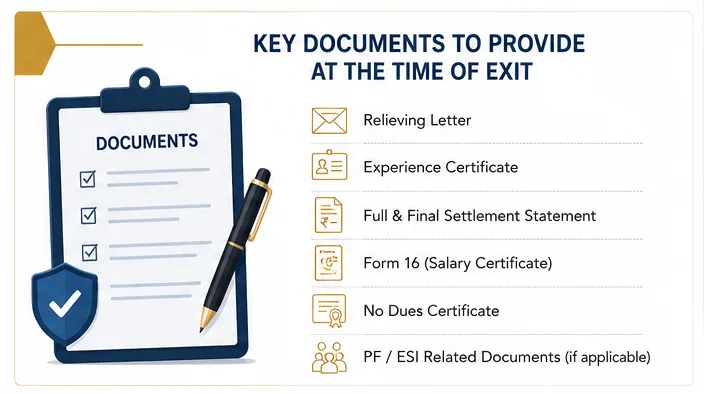
The Full and Final Settlement is the process through which all financial obligations between the employer and employee are settled.
The settlement generally includes:
-
Salary up to the last working day
-
Notice pay adjustments
-
Leave encashment
-
Bonus (if applicable)
-
Incentives and commissions
-
Reimbursement claims
-
Gratuity payments
-
Statutory dues
Employers should process settlements promptly and maintain proper records of payments made.
Delays in settlement can lead to employee grievances and legal complications.
Gratuity Compliance
Under the Payment of Gratuity Act, 1972, employees who have completed five years of continuous service are generally entitled to gratuity benefits upon resignation, retirement, death, or termination under eligible circumstances.
Employers should:
-
Calculate gratuity accurately
-
Issue gratuity notices where applicable
-
Ensure timely payment
-
Maintain statutory records
Failure to comply with gratuity obligations may attract penalties and interest liabilities.
Provident Fund (PF) and ESI Formalities
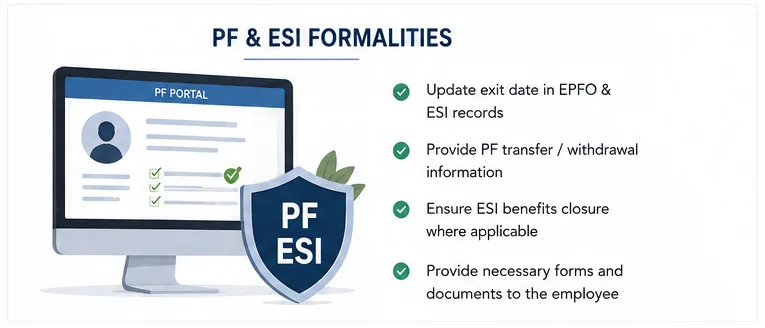
Employers should facilitate smooth completion of social security formalities during employee separation.
Important actions include:
-
Updating employee exit details in EPFO records
-
Processing PF-related documentation
-
Providing information regarding PF transfer or withdrawal
-
Updating ESI records where applicable
Timely updates ensure that employees can access their statutory benefits without unnecessary delays.
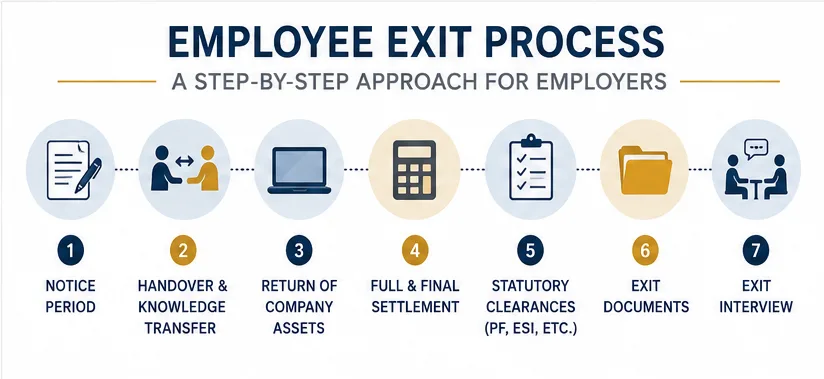
Recovery of Company Assets
Before relieving an employee, organizations should verify the return of company assets and confidential information.
Assets commonly recovered include:
-
Laptops and computers
-
Mobile phones
-
Access cards
-
Identity cards
-
Documents and files
-
Company vehicles
-
Software licenses and credentials
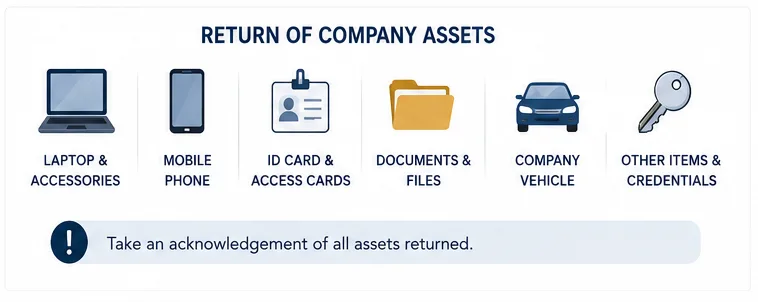
A documented clearance process helps prevent future disputes regarding company property.
Handover and Knowledge Transfer
A proper handover process is critical to maintaining operational continuity.
Employees should complete:
-
Project handovers
-
Client transition reports
-
Status updates
-
Documentation transfers
-
Password and access management
Organizations should maintain written records confirming completion of handover responsibilities.
Relieving Letter and Experience Certificate
Employers should issue appropriate exit documents after completion of the separation process.
Relieving Letter
A relieving letter confirms that the employee has been formally relieved from duties and that no employment obligations remain outstanding.
Experience Certificate
An experience certificate records the employee's designation, employment period, and service details.
These documents play an important role in the employee's future career opportunities and should be issued accurately and promptly.
Exit Interviews
Conducting exit interviews provides valuable insights into workplace culture, employee satisfaction, and areas for organizational improvement.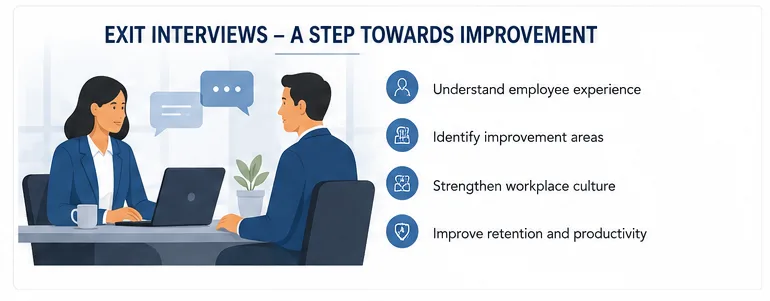
Exit interviews help employers:
-
Identify retention challenges
-
Understand employee concerns
-
Improve workplace policies
-
Strengthen organizational practices
Feedback gathered during exit interviews can contribute significantly to long-term workforce management strategies.
Legal Risks of Improper Employee Exits
Failure to follow proper exit procedures may expose organizations to various legal risks, including:
-
Wrongful termination claims
-
Labour court disputes
-
Recovery claims
-
Gratuity disputes
-
Wage-related complaints
-
Breach of employment contract allegations
Employers should ensure that all actions are supported by proper documentation and comply with applicable employment laws.
Best Practices for Employers
To ensure legally compliant employee exits, employers should:
-
Maintain comprehensive employment agreements
-
Follow documented HR policies
-
Conduct proper handovers
-
Process full and final settlements promptly
-
Issue statutory and employment documents on time
-
Preserve exit records and acknowledgements
-
Seek professional advice in sensitive termination cases
A standardized exit management process significantly reduces legal and operational risks.
How PDA Corporate Solutions Can Help
PDA Corporate Solutions assists businesses in designing and implementing legally compliant employee exit procedures. Our services include labour law advisory, HR compliance reviews, employment documentation, gratuity compliance, payroll settlements, and workforce management support.
We help employers ensure smooth employee separations while minimizing compliance risks and protecting business interests.
Conclusion
Employee exits should be treated as an important component of workforce management rather than a routine administrative task. A structured and legally compliant exit process safeguards the interests of both employers and employees while ensuring compliance with labour laws and employment regulations.
Organizations that implement proper exit formalities not only reduce legal exposure but also strengthen their reputation as responsible and professional employers.